Manifesto Multilinko |
|
|
Interesting links and notes on updates to my main website.
![[add RSS feed]](http://www.feedburner.com/fb/images/pub/fb_pwrd8831.gif) ![[add RSS feed]](http://www.feedburner.com/fb/images/pub/feed-icon32x32.png)
[to search, use Blogger search in top bar] NEW BLOG
HOME ---- 
[contact me] My Blogger Profile View my photo galleries. Listen to my radio station. Currently ReadingThis is an Ottawa blog (Ontario, Canada). Cool blogs: McWetlog wood s lot La Tribu du Verbe Wil Wheaton Darren Barefoot Lectio.ca Blogger profiles in Ottawa Other good sites: Slashdot Wired News Mark Morford's Notes & Errata This page uses Extreme Tracker which is determining your referrer by running some JavaScript. 
The commenting system was Reblogger. |
Saturday, February 04, 2012
a rant about Ottawa urban planning (transportation slice)
French urban planner Jacques Gréber turned a dreary lumbertown filled with with noxious industries and wooden office buildings into an attractive modern capital. The scenic parkways along the Ottawa River and Rideau Canal, the Greenbelt, Gatineau Park, the Queensway and the network of parks and greenery that give Ottawa its postcard beauty today all stem from Gréber’s handiwork.Ottawa Citizen - Building a better capital - February 3, 2012 No. No no no. A thousand times no. Gréber was almost entirely sh-t. Ok. Let me set the foundation. I am not an urban planner. I am also in my blog, so I can say whatever I want. I only walk (I don't drive; I don't have a car). I walk and observe and I think. Sometimes I take pictures. This certainly doesn't make me Jane Jacobs. I also read about urban planning. So this is going to be that jumble of thoughts that is the path I've walked so far. I come from a small town. I spent time in my grandparents' village. Also in a cottage by the sea and a cabin in the woods up on the mountain. And I've walked in New York, Chicago, Boston, Philadelphia, Washington, Baltimore (shudder), Halifax, Toronto & Montreal (not enough to really count in either city), London, Paris, Rome, Copenhagen, Stockholm, Talinn, Grenoble, Alicante, Rouen, Le Havre (mostly shudder), and I also like to walk in gardens and parks and in the woods. Anyway, you get the idea. I'm not working from a single data point. There are three basic built forms:
ServicesThe city is much more than the town, but it includes some basic services from the town, in repeated patterns: the butcher, the baker, (once upon a time the candlestick maker), the cheesemonger, the tailor, the milliner, the cobbler, the confectioner, the fishmonger, the jeweler, the local (pub or cafe), the restaurant, the general shop, the toy store, the flower shop, the bookshop, the pharmacy, the library, a market, fruit and vegetable vendors. There are others that probably aren't coming back: the coal man, the ice man, the milk man, the newspaper boy. Also: the train station, (once upon a time the stables).If you go to any functioning neighbourhood in a city, or main street in a town, you will find these standard services, the same as if you had walked a market street in an ancient Roman town or city. So in part, urban space is services. In functional Ottawa neighbourhoods - the Glebe, the Market, Westboro - you can see these standard sets of services. In Centretown we still don't have many of these basics. The Built FormUrban space is also built form.In a town there is a main street. It has some subset of the services listed above. Buildings are low (a few storeys), they cluster along and around the main street, and then string out a bit at lower density. You can walk the entire thing fairly quickly. Everyone knows everyone. Private life is very hard to maintain. There is pressure to conform and not much diversity. There are not a lot of specialised shops or grand buildings (and thus not many spaces for complicated artistic events.) It is safe and kind of boring. (This is why Kunstler's fantasy of a post-fall world made entirely of New England small towns is chilling to those of us who are very happy to have escaped our American or Canadian small towns.) Away from the main street there are very few if any shops, instead it's all residential. In a city there are neighbourhoods. In major cities these neighbourhoods are often mini-towns. There is a good reason that in Paris it seems like there is a bakery on every street corner - every span of a few blocks has all the services you need in a small town. In the city there are also mostly apartments, brownstones/townhouses and mansions, not detached single-family housing. In the city almost every street is mixed-use - you can walk north-south, east-west along the street grid and there are shops on the street wherever you turn. And then you have the rural form, the standalone farm, the villa. These exist (traditionally ringing towns and cities) to have enough space to farm & raise animals, or to escape the bustle of urban life. These incidentally require an incredibly high level of safety, as you are alone in the middle of nowhere. Once the invaders breached the Roman borders, the villas and farms basically disappear as everyone flees to towns & cities for safety. Villas are far. Farms are far. A day or days to bring your produce to market. A day or days to reach your house in the country. They are not of the urban world at all. Ottawa's built form is that of a town. We have main streets. Side streets have no retail, they're only residential. We need to stop this fantasy of a million person city. We only get a million people by sweeping up an insane country-sized 2750 square km of "city". We're a small prosperous lumber town, with standard main streets, and (where it wasn't all flattened) working linear streetcar neighbourhoods (the Glebe) and grid neighbourhoods (the Market). If you want to grow Ottawa, I suggest "town that first relearns how to be a functioning town" not "in 5 years we'll be Paris". TransportationCities are services, plus housing, plus a transportation network.It's important to understand that there is no "street". There is only public space allocated to transportation. Before cars, THE WHOLE OF THE PUBLIC SPACE FOR TRANSPORTATION was for everyone to use to get around the city. If you look at old paintings and photos and even pre-WWII videos, you will see people wandering back and forth across and along the street (this is before the invented "crime" of jaywalking). The only distinction between the street centre and the edges was intensity of use. The street centre was a mess of mud and horse droppings (at best). There's a reason people had long skirts and high boots. The edge was cleaner and drier. Sometimes the edge was elevated above the mud with boards. But people walking along the edge of the street who saw an interesting shop on the other side did not patiently walk to a street corner, wait for traffic to clear, and then quickly cross, then walk back to the store. They just walked right across the street to the store. When traffic was at horse speed, audible, visible and fairly easy to avoid--not least because in addition to you dodging, both horse and driver would try to avoid you--people just walked across the street. That was it. It was all just a transportation space. For moving people, and for moving things. Unless you were rich, you walked, cycled, or took public transport. The street was yours. It is public space after all. Once the train arrived, the problem of moving people was completely solved. I say again: completely solved. There is no mystery about how to move people around. It's a completed project. Paris is a good example but most any European city will work just as well. Think about a 20 minute or so travel time as the "tolerable" trip time for local. You start with the 20 minute window you can reach by walking - your neighbourhood. Then if you want some specialised service or to visit some distant building, you cycle or take surface transit (a tram). Then if a 20 minute tram ride won't get you there, you go underground and take the subway - it goes much faster, and its stops are much farther apart. That's it. That's moving people around the city. If you want to live outside the city where it's greener / cheaper / whatever, you live in a town. Your town connects to the city by a 20 minute commuter train ride. (The town may have pre-dated the commuter line, or been created/arisen at the commuter rail terminus.) If you want to visit another town, you take a local train, it takes a few hours. Starting in the late 20th century, even more amazingly, the final piece: if you want to go from one city to another, you take high-speed rail, it takes a few hours. That's it. That's moving people around the country. I want to say this again: the problem of moving people around urban spaces is solved. It's not a mystery. In Parisian terms: walking, the velo (including bike rental), the bus (sadly Paris doesn't have many trams), the metro, the RER (commuter rail), the TER (inter-town rail) and the TGV (inter-city rail). Like I said: this has been done. This is a completely solved problem. This leaves only two actual problems: how to move large objects around (things bigger than you can take on the tram), and how to move people & things around in rural areas where you can't just run a train line. It's entirely reasonable for the solution to be: small trucks and cars. You see, I don't hate the car. I just hate the car when it's used for the completely retarded purpose of moving people around CITIES. It's entirely reasonable for you to have a car at your farm in the middle of nowhere (and to drive over sadly bumpy roads, to the nearest train station / town). It's entirely reasonable for your piano store to have a small truck that moves pianos around the city (driving below 30km/h, and ideally late at night or early in the morning). And that's it. That's the entire transportation picture: priority to walking, wide cycling lanes, gleaming trams gliding down surface rail, thundering subways blasting along underground rail, simple efficient commuter rail (often a mix of surface and subsurface, as in the case of the Parisian RER), quick basic inter-town rail, and amazing rocket-like comfortable high-speed rail (HSR), all in a shining network of steel connecting every major population node in your country (or in some countries like France, even tiny towns - Saillans is a town of 900, but there's a train station that connects it into the entire French rail network nevertheless). I shouldn't even really have to explain this - we used to do this in Canada, everything except the HSR that hadn't been invented yet. It was a huge national-celebration-scale deal when we completed the network. Anywhere you go that has "Station" in its name used to have a train station. Why is there Londonderry (NS) and "Londonderry Station" when the area just has a town of 200 now? Because there was a Londonderry Station 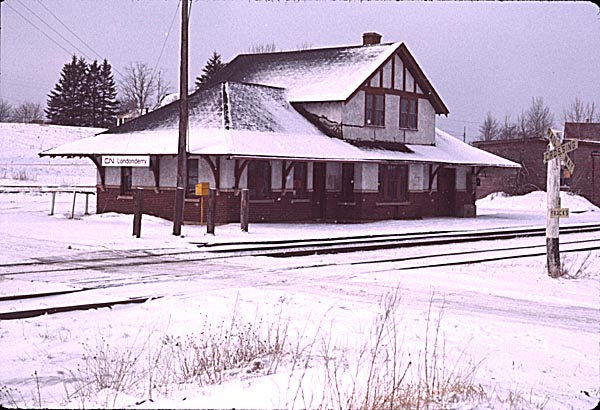 The Fucking CarSo how did we get from this solved problem to the mess we're in now? The car.And you can understand it. They didn't know the city would be blown apart by the car. There were a whole bunch of overlapping things that are hard to disentangle. How crazy were they? Please take a few minutes to check out these two videos from the dawn of the car-crazy era. These appear like some kind of extended joke to us now (if they don't appear that way to you, you probably want to stop reading now) but they were dead serious, this was the real capital-F Future they imagined.
Design for Dreaming (1956)
Disney (Disneyland TV) - Magic Highway USA (1958) Seriously. These people were out of their minds. They thought it was one step from curving ascending highways to flying cars and then rocket cars to the moon. They thought everything, without exception, should be automated, inconvenience eliminated, physical effort banished, spaces enclosed. Never go outside! Never walk! Man vs. Nature: The Road to Victory. It's hard for us to understand this - the people standing on moving sidewalks rather than walking from store to store, the car that flies right up to your office door - but we're simply too far removed. Washing used to be hard work. The washing machine was like a kind of miracle (as Hans Rosling argues in a great TED video). The car gave everyone transportation faster than a horse, more personal than a train. They had just crushed the Nazis with American jeeps and tanks and planes and bombs. American industry had saved the entire goddamn world. They were going to the moon. Can you imagine living at such a moment and not thinking you could just sweep away everything old, all the old musty city and build a shining new future? It's easy for us to sit in 2012 with fat kids and strip malls and cratered downtowns and wonder how they could have done this, but they seriously just saw it as another step, just more progress. The car replaced the train. The plane replaced the transatlantic liner. The bus would replace the tram. Everyone would be free, happy, rich, everyone a king in their own suburban mansion, commuting to shining city towers to work on space projects. You can see it in every frame of the above videos. They believed. No one sitting in their comfortable detached brick house in downtown Ottawa in 1950, living their comfortable middle-class life, walking and taking the trolley, thought "hey, let's add cars and turn this into a a bunch of crumbling crackhouses". They thought, out with the old, in with the flying cars and houses on the moon. And just about everyone made the same mistakes. The only difference is at what point they started to realise what they were doing, and work to undo the mess. And even then, even in the most difficult places to have a car, people love their fucking cars. In New York where it is incredibly inconvenient to have a car and a parking space might cost you as much as a Canadian suburban house, they love the car. In France, where you pay high gas taxes and high road tolls and high parking fees and you have endless transportation alternatives they love the car. Beautiful walkable transit-friendly Paris is jammed with cars. Stockholm is full of cars. In fact about the only place you can see the less-car world is in Copenhagen, where beautiful women glide slowly by on bicycles on quiet streets, like something out of a dream. So let's have no illusions that it is easy to eliminate the car. But you can work to provide the alternatives. You can learn from the disaster that was the 60s and 70s (and which continues unabated in many places in North America, to the point where mayors in 2011 triumphantly crow about "ending the war on the car" as if the car hadn't blitzkrieged pretty much every aspect of pre-WWII urban life and culture into utter annihilation). The TramIn France they got rid of all the trams... and then started rebuilding the tram lines again in the 90s. Wikipedia - List of town tramway systems in France tells the tale:Mulhouse: closed 1956, rebuilt 2006 Strasbourg: closed 1960, rebuilt 1994 Bordeaux: closed 1958, rebuilt 2003 Dijon: closed 1961, rebuilt 2012 (expected) Rouen: closed 1953, rebuilt 1994 Toulouse: closed 1957, rebuilt 2010 Valenciennes: closed 1966, rebuilt 2006 Nantes: closed 1958, rebuilt 1985 Nice: closed 1953, rebuilt 2007 Grenoble: closed 1952, rebuilt 1987 Lyon: closed 1956, rebuilt 2000 You get the idea. Meanwhile Ottawa: closed 1959, rebuilt ???? and no, that is NOT rebuilt 2017 or 2019 or whatever the Ottawa "LRT" date is. The old proposal, the previous proposal I tried to be very clear about the different transportation modes above, about the solved problem of transporting people, because it seems Ottawa is incapable of understanding this distinction. A train that runs above ground is not a tram. If it has stations far apart and is designed to move people from the suburbs in and out of the city core, it is commuter rail. Ottawa is building commuter rail. A little tiny bit of commuter rail. That's it. The LRT will do exactly zero for people living downtown who want to move around the city the way actual residents do, which is between neighbourhoods: from the Glebe, to Centretown, to Westboro, to the Market. Those are the places people who like the urban space want to go. The LRT will not get them to any of those places. The LRT is for jamming even more commuters even more quickly in and out of the CBD. That's it. Whatever shall we do?If you want to do a proper Ottawa (transportation slice), what you do is: 1. rebuild at least the S and B lines of the Ottawa trolley (Didn't know we had a trolley system? It covered the entire downtown, and since it was for residents, not suburban commuters, it connected together the neighbourhoods of the city -- to some extent it helped create the neighbourhoods of the city.)  2. Run commuter rail out to defined town centres. And that's it. None of this "park and ride" BS. You want to ride the train? LIVE NEAR THE TRAIN. 3. Run local rail to local towns (that means towns far beyond 20 minute commuting distance). 4. Run high-speed rail Montreal-Ottawa-Toronto. It will cost $9 billion and pay for itself. How do I know this? Because the federal government told me, although they buried that info so far in layers of clicks and bottoms of paragraphs you would never know it. Developing the section between Montreal-Ottawa-Toronto could cost between $9.1 [billion] for 200 km/h and $11 billion for 300 km/h. ... a project between Montreal, Ottawa and Toronto only could generate a positive net economic benefit at both 200 and 300 km/hUpdated Feasibility Study of a High Speed Rail Service in the Québec City – Windsor Corridor (November 14, 2011) - emphasis mine and the central station for all this rail activity should be, you know, the central train station: Ottawa Union Station. 5. And yes of course, do a loop around to Gatineau (although the weird 60s inward-facing Place du Portage "employment node" really should be torn down, which would reduce the number of public servants who need to do the loop around). And run rail to the airport. These are also obvious and there is dedicated rail to the airport in London, Paris, Stockholm etc. etc. 6. In the space you gain from reclaiming the public transportation space from cars, widen the sidewalks and provide cycling lanes. The high predictability of rails-bound trams means that they very comfortably mix with pedestrians and cyclists. You may have noticed that I didn't mention a subway - you only need a subway (which is enormously expensive) if there are long-haul distances within the city that your existing transportation network can't satisfy. So IF you build the entire tram network and you find a lot of people still aren't able to get around within a 20 minute tram-ride window, then you think about a subway. But the Ottawa core is small and a long way from densely populated - from e.g. LeBreton Flats to Riverside Park you're only talking what, 7km and only a few tens of thousands of people? It's pretty hard to justify the expense of a subway through kilometres of rock just to save a few people a few minutes of travel time around the core. The disconnect between what I see as a straightforward transportation plan and our inability to act as a city is a tiny fraction of what drives me insane about the NCC Horizons 2067 and Centretown Design Plan and Downtown Moves (and whatever the hell Choosing Our Future is). You don't need some effing panel of experts. You don't need to consult and re-consult and re-re-consult until 2013 to decide what you will do in FIFTY-FOUR years from now. Just this transportation slice is not only obvious, but could be done within the span of years, not decades. Don't spend $2 billion on 12km of commuter rail and think you've saved the city. All that does is encourage commuters to live FARTHER away, and rewards developers who will jam the cheapest, tallest, ugliest towers near-ish to stations and call it "transit-oriented development". Build a whole entire network. You don't need a single new idea. Just remember 1950s Ottawa, 1950s Canada, and 2012 Europe. You want to fix our little lumber town that was never a city in the first place, that is never going to be Paris or London in some undefined "G8 Capital" sense, but that is at least a more functional space than the created-from-nothing planned city artificial capitals like Brasilia and Canberra? Just revisit the prosperous, functional 1950s city where public servants lived downtown  bring back some of the infrastructure that enabled that, and add the modern infrastructure that we have learned about in the last SIXTY YEARS. While you're at it, you might want to end the insane fantasy that 2760 square km spanning from the woods to central condo towers is a "city". 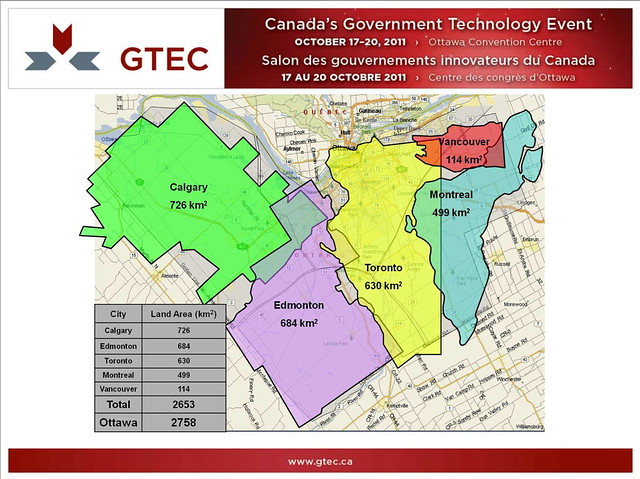 I have a lot more to say about the built-form issues and general suburban suck, but this is enough typing for now. Labels: ottawa, ottcity, rant, transportation planning, urban planning, urbanott, yow Sunday, June 13, 2010
what can I do? (about BP oil gusher)
Bunch of stories in the media about volunteers and other people feeling helpless because they're not allowed to do anything to clean up the spill, or they're not able to do anything. Toronto Star - Plenty of Gulf volunteers, not enough work to do - June 11, 2010 Not enough work to do? Are you cussing kidding me? How about, you know, FIXING THE CARBON ECONOMY. I think that should keep you busy for a while.
Toronto Star - Despair and anger in wake of Gulf oil spill - June 11, 2010 What can you do? Oh I don't know, off the top of my head: * reduce your own use of oil and gas * reduce your city / region / state / country's use of oil and gas * fight for better regulation of oil exploration everywhere * fight for elimination of offshore drilling * fight for a plan to reduce use of foreign oil, risky-site and high-energy-input oil to zero * fight for a carbon tax * fight for walkable urban regions that reduce oil use * fight for reduced oil subsidies worldwide (estimated at $550 billion per year) * eliminate all US oil subsidies * reduce highway spending, increase spending on cycling and walking * eliminate the use of oil for non-transportation uses (plastic, asphalt etc.) * reduce waste of plastic (e.g. replace plastic water bottles with municipal tap water in reusable containers) * raise fuel-efficiency standards even higher and more aggressively * eliminate this corn ethanol boondoggle * put billions into clean energy research, like wild hippies such as Bill Gates and the CEO of GE have recommended * fight for public transit in every city and town * fight for high-speed trains connecting every city I'm sure there are many more. You want to help? Don't drive or fly thousands of miles to try to get approved to clean some birds that are going to die anyway. (The irony of burning oil to get to a beach to clean up oil is rich.) STAY WHERE YOU ARE AND USE LESS OIL. Don't just say hey, it's the Petrochemical Age and Cutting your personal dependence on oil easier said than done. Just do it. Less plastic. Less driving. You want to fight this fight? Fight against the entire oil system, don't go scrub some birds. Labels: rant
parsing the media
Big Important stories, according to the media: * The BP Gulf oil gusher * The Exxon Valdez oil flood NOT big important stories, according to the media * the 11 people who died in the initial BP explosion * any other oil gushers and floods * any other pollution in the ocean, like the giant maelstrom of plastic swirling around * the fact we've scraped / scooped / mined the oceans bare of fish anyway * the destruction of coral reefs * any land pollution * the oil-intensive economy * the carbon-intensive economy * Bush-era regulatory failings * corporate malfeasance on epic scales * clean energy * energy efficiency * reduced consumption * the War in Iraq * the War in Afghanistan I can't decide if this means our media is stupid, our people are stupid, or both. Labels: rant Wednesday, June 02, 2010
a modest proposal about the market
Here's a suggestion: if "the market" is supposed to fix problems, why doesn't "the market" let the digital lock people compete to make locks that ACTUALLY WORK? Why do we have to protect their broken locks in law? You know what would actually prevent people actually copying your actual DVD? If your lock actually fucking worked. But since that is impossible, we must enshrine the fantasy notion of it working in our legal system. Labels: rant Sunday, March 14, 2010
Marc Thiessen and the Assault on Reason
(I wasn't a big fan of Gore's book, but the title captures the issue well.) You can see Thiessen's interview with Jon Stewart on the March 9, 2010 Daily Show in full online in the United States (and the 20+ minutes of extra material online are a must-watch) or you can get the full interview in Canada through iTunes I've been thinking about the core issue in the discussion between Marc Thiessen and Jon Stewart, and it comes down to this: Marc Thiessen and his ilk put forth the position that you can have perfect knowledge. (I thought this kind of insight was reserved for God or at least the Divine King, but anyway...) That is to say, they believe in absolute, unshakeable certainty. If X, then Y, 100% certain. There is a reason I put the idea in a religious context because it exists only there and in the purity of mathematics. Jon Stewart challenges this viewpoint very well, speaking of our actual world as instead being "complex, adaptive system". The thing is, if our actual human world was simple cause-and-effect certainty, perfect knowledge, you wouldn't need the Rule of Law. You wouldn't even need politics. You could simply say who is guilty and who is innocent, you would KNOW. You could simply list the 100% certain outcomes of a policy choice and let people decide. In the imaginary, certain world of the crazycons, you don't need reason, you don't need logic, you don't need analysis, you don't need debate, because you already have CERTAINTY. You would, apparently, know for certain that torture would provide reliable intelligence, that NOT torture would absolutely not, and that the consequences of torture for the larger system would be positive, not negative. This is some kind of insane child's view of the world, not the reasoned position of an intelligent adult. This is without even getting into the articulation of positions that are morally wrong, legally wrong, constitutionally wrong, and historically wrong. This is not even to get into the fact that they put this position forth clearly to the American public and THEY LOST. THEY LOST THE ELECTION. The American people made a choice, and now the losers reject their choice. This is not even to touch on the fact that, after having LOST, due to a majority vote of AMERICAN CITIZENS, they continue to brand anyone who disagrees with their particular viewpoint as traitors. So to sum up: * Certain people know absolutely everything with total certainty. * If you disagree with them, you are a traitor. Oh yeah, that's exactly the system of government the Founding Fathers envisioned. Labels: rant Tuesday, March 24, 2009
BSG: why "religious elements" is not an excuse
(Sorry this got published empty initially - if you hit return in the title box, it publishes.) Let's remember: this was science fiction, on the Science Fiction channel. Let me take a little detour, before I get back to that. Let's imagine Conan Doyle pens the following Sherlock Holmes mystery: Act 1 - a man is praying in a church Act 2 - the man is found dead in an alley Act 3 - Sherlock Holmes investigates and the readers follow the trail of forensic clues - along the way we discover the man was devoutly religious and prayed every day. We follow along through muddy footprints, mysterious letters in locked drawers, unaccountable blood stains... Act 4 - And then in act 4 an angel appears to Sherlock Holmes and says "oh God did it, he was tired of listening to that guy praying" Satisfying ending, right? All ok because, you know, it had religious elements all along. Ron Moore's ending is no different than when you're following along with the Pip episode of South Park, a humourous retelling of Great Expectations, full of period detail... and then Miss Havisham has robot monkeys. This is hilarious, because it is ridiculous. It's would be absurd for a work of serious fiction to start off in one genre, and suddenly at the end veer off into another. But it's even worse than that. It might have been forgivable if Moore had said "it's all about the characters, I'm not making a big deal of the science". But in fact, Moore made such a huge deal of making a "realistic" science fiction show that there's an entire Battlestar wiki entry on "Naturalistic Science Fiction":
The "no deus ex machina" part is looking pretty ironic right about now, isn't it. So basically, Ron Moore explicitly set up the expectation that his show, while having background religious elements (a realistic part of fiction, since our own society also has such elements), would never be religious fiction. But that's what he did in the end. He turned it from science fiction, to fucking Left Behind. That is total disrespect for his OWN STORYLINE and the philosophy of the show. And this is not about some people "not liking religion". I think religion can be amazing. Have all the freaking religion you want. Just don't spend four seasons depicting a natural world with some unexplained elements, and then in the last hour say "God did it". That's not about religion, that's about BAD STORYTELLING. Labels: battlestar galactica, rant Monday, March 23, 2009
BSG: This is not a happy ending
You want to know what the story is in the magazine AFTER mitochondrial eve? It goes something like this: "A body found in the mountains has been dated to approximately 150,000 years ago. The skeleton of a man in his late 30s, there were striking signs that this individual had had a difficult life. There were strong indications of starvation and malnourishment. Bone scars indicated repeated encounters with primitive weapons and possibly predators. As well there were clear indications of repeated bouts of malaria and other diseases common to the African plains below the mountain. The cause of death was probably either exposure, hypothermia or bloodloss, as the left leg was broken. Paleo-forensics experts concluded it was probably an agonizing death. What someone of that era would have been doing so high in the mountains, without modern protective clothing or sophisticated climbing gear, is a mystery. There are also puzzling reports of signs of something like modern dentistry on some of the teeth, but scientists dismiss this as simply an unusual anomaly due to high metal concentrations in the mountain deposit in which the body was discovered." Lee Adama: "I want to explore!" Oh do you Lee. You're on vacation are you? With the clothes on your back? With what calories are you going to get the energy to climb these mountains? How much leisure time do you think you're going to have, trying to scrape up enough nutrients to stay alive with a somewhat balanced diet, competing against hordes of very able predators and tribal angry protohumans? God has not brought these people to the land of milk and honey, they are not going to spend the rest of their lives lounging in hammocks. They are going to die. Rather horribly and brutally. That's the reality. You want to know how awesome colonization is, even when you have some technology, and entire empires just an ocean away, and you can actually speak to the natives who have a reasonable level of civilization?
Wikipedia - Colonial history of the United States Now you could certainly imagine that it was different for the colonials, except for the second ending, which by placing them so far back in our own past, tells us that: * no bodies of the colonists other than Hera have survived/been discovered (because the modern dental work would be a giveaway) * none of their language survives except perhaps as some ur-word-roots (certainly no written language, since that wouldn't arise for something like over 145,000 years) * none of their farming survives (since that wouldn't arise again for over 140,000 years) * none of their technical knowledge survived * none of their other culture survived * they are not remembered in the modern era in any way whatsoever * plus trying to find a partner would have been a nightmare - preverbal tightly familial protohumans? What are you going to talk about with your sickly, illiterate, primate love for the rest of your short life? Dirt? This is not a happy ending. They are not on safari in Africa. This is not a fucking vacation adventure. They are not all going to become humble farmers, surveying the waving grain in their fields. Baltar is a farmer is he? And how is growing up as a farmer in an incredibly advanced integrated technological society of billions going to prepare him to scrape a living out of the dirt on a COMPLETELY DIFFERENT PLANET with no infrastructure and no technology whatsoever? Without even any domesticated farm animals? After 4 years of fighting against all odds, these remnants from the pinnacle of a civilization are going to lead short, nasty, brutish lives and ultimately nothing they did will matter, they won't be remembered, they will have no impact on anything whatsoever. Roslin's board count is going to go from 39,000 to 15,000 to near 0 within the span of a few years. Not only that, they will die KNOWING that this horrible end is God's idea of a good time. Wow, that is quite the gift to your fans there, Ron Moore, thanks a lot. Labels: battlestar galactica, rant Sunday, March 22, 2009
BSG: we're all going to die, so just give up
SPOILO-RAMA Fiction can be about a lot of different things. It can be about the characters, it can be about the setting, it can be about the journey, it can be about the mystery, it can be about a message, it can be people and setting just as props supporting entertainment & humour, or it can be in visual media just about how it looks. The only thing different in science fiction is that it can also be about technology. The big complaint against classic science fiction is that it was, in fact, more about the technology, or about the setting, than it was about the characters. Star Trek: The Next Generation was a classic technology-driven show, all ray guns and tractor beams and particles and fields. (Which would have been ok, had it been about actual science and actual space, instead of just made-up gibberish about polarised tetrions.) Deep Space Nine was a more character and plot driven show. Where things can go wrong is when you start one way, and end another. For example, The Matrix series starts out with some incredible ideas and visuals, cleanly executed plot, heroism and triumph, and then in the 2nd and 3rd turns into a bunch of gibberish with people having underground raves, pointless special effects, and a nihilistic "all this has happened before" explanation by The Architect (hmm, sound familiar?) Oceans 13 you think you're trying to follow a particular plot, and then at the end it's, oh audience members we were just showing you the con, suckers, thanks for paying for our vacation in Europe. Battlestar was clearly and deliberately not about the technology, it was about the characters, the mysteries, and preserving the last surviving remnants of civilization. Now *some* people watched it just for pure entertainment. For them an ending with "a bunch of stuff blows up and god did it" is fine. For those of us following the story arc, the mysteries, and the survival of civilization though, Ron Moore pulls the rug out from under us. The only thing I can figure is he had the vision of modern-day earth as his grand finale, and then he had to get rid of all the inconvenient truth of BSG in order to do his nice clean break with the past. Why do they have to throw away all of their technology? A: Because modern Earth doesn't have any of it Why do they all have to (effectively) commit suicide? A: Because nothing remains of their civilization in modern Earth In essence, in order to tell his preachy final story about Fear the Japanese Robots! Ron Moore had to KILL EVERY CHARACTER POINTLESSLY. * Those characters you've been following? Essentially they all end up as different versions of Cavil, saying "Frak!" and blowing their heads off, like Dualla did earlier on when a pocketwatch made her think "well, this was all a waste of time". * Those mysteries you've been following? Err, a wizard did it, whatever. * The last remnants of civilization? Err, civilization sucked, let's throw it all away and all die of disease, starvation, and murder by rather more skillful native populations. * 35,000 surviving humans, having beat impossible odds? Ah fuck em, there are already humans on the planet, so the colonists should all just go off in some tiny unsustainable scattered groups and die already. * Faster than light technology, space travel? Yeah we better toss that in the garbage too, err I mean the sun. The only ones who come out of it well are the (presumably) immortal killer robots. They get to keep all the technology and explore the universe. The humans? Fuck em. Which gets you all nice and tidy to Live from New York, this was all pointless, thanks for the mitochondrial memories, the end. PS fear the robots. So in order to get to this final few minutes of badly written, preachy, junk, you have to turn the ENTIRE PAST FOUR YEARS from a noble, character-driven adventure, to an exercise in nihilism. From a message of imperfect humans striving for survival against impossible odds to: fuck it, fate determines everything anyway, civilization is terrible, you might as well just say Frak and blow your head off suicidal nihilism. Thanks Ron Moore. You suck. Labels: battlestar galactica, rant, television Saturday, March 21, 2009
BSG: rational civilization sucks
SPOILERS So BSG finale had two failings: 1) deus ex machina solution to all plot mysteries - ok fine, you can't be bothered resolving the plot points, whatever 2) Much more serious and disturbing to me, in the last two hours, a bizarre direction inconsistent with the entire theme of the show: all of a sudden it goes anti-science, anti-technology, anti-civilization The message of BSG up to 4x20 was quite simple: the world is a dirty, real, flawed place. The war between Cylons and humans is because both sides have flaws of character and imagination. Technology is just a tool that you use. Then I was reading Television Without Pity and thinking about this strange emphasis in the flashbacks to drinking and various sorts of debauchery, with people behaving out of character - and I saw the message, which is quite clear once you look for it: civilization itself, the modern technological world, is sinful, twisted, unclean, cruel. Similarly, for committing the sin of being a doctor guy, and doing science stuff on Hera, and saying mathematics things, Simon gets his neck snapped. Doesn't he know that Hera is about faith and impulse and visions and prophecy and god's plan? How dare he be all rational. Baltar's sin becomes not destroying the world through narcissism, his sin is that he was a scientist instead of a farmer. After four years of trying to hold together a technological civilization, the solution, the redemption is: fade away, abandon technology. The technology itself becomes the sin. Redemption is: god is playing dice with the universe anyway, just accept fate, why bother with rational thought, god rewards only faith. THIS IS COMPLETELY INCONSISTENT WITH THE PREVIOUS FOUR YEARS OF THE SHOW. It is anti-science and anti-civilization, and I think it is reprehensible. Do you know what life is like without the "terrible debauchery" of modern civilization? It's not some noble savage bullsh-t. It's a bunch of dirty people starving, dying of disease, spending lives in pain and ignorance and brutalizing each other unbelievably. Civilization is good. Ron Moore, I can't believe you changed the message of the show at the end from "we're all just flawed people in a gritty world" to "fear the Japanese robots". That's insulting. That's just plain wrong. Maybe you should try living with the clothes on your back on some island somewhere and see how awesomely redemptive the starvation, disease, loneliness and deprivation is. Enlightenment does not come from suffering in ignorance. Enlightenment IS civilization. How dare you make the end of Battlestar a platform to suggest otherwise, inconsistent with the values of the previous four seasons. Labels: battlestar galactica, rant, television Friday, January 30, 2009
fighting the spoilers
In order for me to watch BSG (or any show) in my preferred mode, which is to have no idea what's coming, so that I can be surprised (a concept which apparently no longer exists), I have to * avoid all the commercials on Space which advertise what's going to happen * avoid the f-ing pre-show blast on Space slotted right before BSG which advertises what's going to happen * avoid the in-show montage which shows what's going to happen * avoid the post-show ad/montage which shows what's going to happen next week Yeah, real-time TV is great. Between the ads and the popup boxes and whatever all damn things, it's clear that it's designed for attention spans that are miniscule. sigh Labels: rant, television Tuesday, December 30, 2008
your choice of unappealing futures
Cheney (my guess, anyway) - world descends into chaos as resources become increasingly limited in a 9 billion person world. US preserves its capitalist fantasy by projecting power and incredible violence abroad, total surveillance and control at home. the triumph of authoritarian capitalism Kunstler - everyone lives in a boring gossipy American small town (I don't know why he didn't just say "let's all become Amish!") Kaczynski (as I understand it) - let's all become Amish! Friedman - technology solves all problems, green utopia of "sustainable capitalism" (an oxymoron if there ever was one). intelligent grids! self-driving cars! blah blah blah It would be like living in the Star Trek: Next Generation - bland people pushing buttons and having meetings. Gernsback - (with credit to The Gernsback Continuum) - we all live in orderly domed cities with cars going in tubes between shining towers - of course this requires a totally conformist, authoritarian society in order to keep the towers shining and the tubes unclogged That's just great. I don't want to live in any of those futures. They're either boring, or terrifying, or a bit of both. The sad part is Cheney's vision may actually be the most probable one. It's basically predicated on the majority of Americans being unwilling to change their lifestyles in any major way. That's probably a pretty reasonable assumption. Of course, Cheney certainly helped his vision along by working obsessively towards it for the last 8 years, but even if we'd had some shiny Green Gore 8, I'm not convinced it would have made a huge difference. As for Friedman, for god's sake man, have you learned nothing from the last 50 years of covers of Popular Mechanics and Popular Science? There are no flying cars and vacations to the moon. THAT FUTURE ISN'T COMING. Technology didn't change people. Making your book a plea "Dear America, I want my shiny bullet trains and modern airports, please please please" isn't going to turn America or Americans into Europe or Japanese. Not only is the future unevenly distributed, America doesn't believe in that future any more. Writing your wishes in a book (Hot, Flat and Crowded) and labelling it non-fiction doesn't make it so. Monday, December 15, 2008
road to the 19th century
The tragedy is that one of the main parts of the 19th century that was good, the trains and later the trams, is the one that gets the least attention thanks to the ALL CONSUMING CAR
Humans, as well as cargo - Globe and Mail - December 15, 2008 The Globe is entirely right. And the chance of that happening is zero. Instead we will get bailouts and infrastructure for an assortment of 19th century industries that have been brutally OVER industrialised: * mining * forestry Tories set to add forestry, mining to bailout list - Globe and Mail - December 15, 2008 and a bunch of money for car companies and roads, two 20th century developments that, particularly in North America are substantially responsible for: * destroying the urban fabric * enabling a hyper-individualistic society * filling the landscape with cr*p stripmalls * deliberately destroying the aforementioned train and tram systems * pollution on an epic scale * consumerism uber alles * oh and as a bonus, killing 30,000 people in the US every year. Yeah you read that right, THIRTY THOUSAND PEOPLE A YEAR. (In Canada it is, not surprisingly, about 3000.) So we'll spend a trillion dollars and get what, $15 billion on new technology and $985 billion on the same cr*p roads and cars and factory industrial everything that made the 20th century suck? Awesome. Sunday, October 19, 2008
The Reality Party
When you start with the wrong assumption, you can then proceed to draw the wrong conclusions. Modern "conservatism" has this assumption at its core: People want small government Once you have that assumption, the next steps are logical: Cut spending and taxes to deliver the small government that people want. Step by step, make the government smaller and smaller. Here's the problem: In reality, people love big government People don't like the always ill-defined "government waste" and for the most part, people have no idea where the large percentages of government spending go. But once you name a specific program, people are generally all for it. Government is bad... oh except for social security, and the military, and building roads, and... This contradiction between the assumption of small government and the desire for big government is the fundamental flaw at the heart of this movement. So what actually happens in a "conservative" government is: Cut taxes. Discover to your shock that no one wants you to cut spending so... cut taxes again. Pile up gigantic deficit. Dear conservatives: People like low taxes (particularly the suburban/exurban/rural fantasists who think they shouldn't have to pay for anything). People like big government. If you were the Reality Party, you would deal with this by MATCHING TAX REVENUES TO EXPENDITURES But since you're not YOU WILL RUN DEFICITS FOREVER
above quoted from Huffington Post McCain, you've been in government 26 years and you don't know that's what government already does? Have you never heard of social security? Medicare? The military? Idiots. Worst of all, this is not even some new insight. In 1986, David Stockman wrote The Triumph of Politics: Why the Reagan Revolution Failed. The Reaganites got in power, and started to dictate to Congress: away with rural electrification, cut program this and program that. And Congress said: no. This entire philosophy of governance fails when it hits reality. Adding the extra supply-side fantasy that you will increase tax revenues by cutting taxes, and you just make it worse, but the main problem is the inability to accept that people want the government to spend, so you either behave like adults and pay for the spending, or you encourage a selfish, childish, fantasy economics where you don't have to pay for what you get. They shouldn't call modern "conservatives" the party of small government, they should say Modern conservatism is the fantasy of small government I'm a fiscal conservative. It's a tragedy that modern conservatism has so tarnished this concept that I almost prefer to say fiscally responsible, since "conservative" doesn't mean anything any more. Being fiscally responsible means I believe 1. You never run a deficit because 2. YOU ALWAYS TAKE ENOUGH MONEY IN TAXES TO COVER YOUR SPENDING Hey "conservatives", you might want to try that. Labels: rant Friday, May 02, 2008
consumer rant
Ok back in my day, we had soap, and toothpaste, and toothbrushes. The soap didn't come with RNA to rewrite your genetic code to make you smell like roses, the toothpaste didn't try to whiten your teeth beyond all brilliance, and the toothbrush didn't try to freshen your breath. What is it with Americans and "freshening" things with chemicals anyway? Does their entire country smell so much like sh-t that the only way to deal with it is to Axe-spray and Glade-blast their bodies and houses? WTF? So now when I go to buy ordinary, unscented soap, they don't sell it any more. When I go to buy toothpaste, I have to wade through box after box of shiny declarations of total tooth-tactular enhancements to find one that will, you know, just help a bit to clean my teeth. And toothbrushes, are the same, it took me like 10 minutes to find one that wasn't some antibiotic nanotech particle wonder. Dear Every Product Manufacturer: Stop taking away simple products and replacing them with enhanced ones full of a bunch of chemical technology garbage I don't want. Yes, I know I can go to the organic store, but then I have to try to sort my way through some gluten-free toothpaste made by Nepalese orphans hand-grinding glacial pumice or some damn thing. I don't need gluten-free toothpaste, I just need regular f-ing toothpaste like they used to sell for the first 30 or so years of my life. How can all this corporate energy manage to consistently produce products I NO LONGER WANT? I don't understand. I just want some ordinary freaking washing powder, I don't need Spring Happiness Scent, now with Estrogen and Pheromones to make you love your clothes (tm)! Sigh. Labels: consumerism, rant Wednesday, April 23, 2008
Hillary Clinton will destroy the Democrats for a generation
Selfish much? Hillary, I know you read the polls. ONLY OLD PEOPLE VOTE FOR YOU. In what universe do you imagine that's a sustainable strategy for the Democratic party? If you win, and November is the 71-year-old white man and you, the 60-year-old white woman, slinging dirt, you will turn away young voters in droves. You may turn an ENTIRE GENERATION OF VOTERS away, permanently. Let's hear from your supporters
New York Times - In Clinton vs. Obama, Age Is One of the Greatest Predictors Yeah, there's the future of America, crusty old people WHO MAY NOT EVEN BE ALIVE IN NOVEMBER. A bunch of old boomer women who think a woman running something is a Big Deal. Everyone under the age of 40 has worked with and for women. It's 2008 people, women won that victory decades ago. Join the 21st freaking century. I know politics is about ego, but jesus, step back and look at the big picture. Obama runs and the youth vote belongs to the democrats for the next decade, or you run, and young people stop voting for democrats at all. And now that she's "won" Penn. by yet another margin so small as too be meaningless, with Obama STILL AHEAD IN DELEGATES, we're going to have to listen to her stupid, petty little campaign for months more. Hey Hillary, I have a slogan for you: Vote Hillary, Because Old White People Have Done Such A Great Job Of Running Things Labels: demprimary2008, politics, rant Sunday, April 13, 2008
Battlestarwear
Err, is it just me, or does the Official Battlestar Galactica Merchandise look like something some kid threw together the night before his Battlestore was due to open? http://www.nbcuniversalstore.com/index.php?v=nbuscinowbstapp Seriously, this is what you have for fans? A t-shirt that says "Get Your Cyl-on"? Are you kidding me? Labels: battlestar galactica, rant Monday, March 03, 2008
$3.8 billion down the DRTN?
The latest in Ottawa's string on transit plans is the Downtown Rapid Transit Network (DRTN). If you read their strawman options, it's pretty clear they want you to choose the $3.8 billion tunnel with LRT option 4, unless you believe in option 1's "articulated bus every 14 seconds" which seems, shall we say, somewhat improbable. http://www.ottawa.ca/residents/public_consult/beyond_2020/tmp/transit_options/index_en.html Honestly, just call the train a tram, which is more accurate, and build the fucking thing. Everyone's all "billions of dollars blah blah blah". We're the capital of a rich country, this is ridiculous. So far we can't build: * a new central library * a new central concert hall * a new tram-based rapid transit system Jesus Christ, if they can have buses AND trains AND a subway in Copenhagen, population 500,000 http://en.wikipedia.org/wiki/Copenhagen#Public_transport You would think Canada, one of the richest countries in the world, could manage to build a little fucking TUNNEL. Labels: ottawa, public transit, rant Monday, February 25, 2008
you want fries with that rant?
I was so looking forward to our cafeteria changing to a local company, but unfortunately they have kept the same minimum-wage, lunchlady staff, and have added a total incapacity to serve the numbers of people necessary with the variety needed. I had some fries today that I described as President's Choice Memories of Residence: soggy steamed fries that brought back 4 years of crummy residence food trauma all in a rush, except they cost me (with grilled "cheese" sandwich) $5.35 I now hate the cafeteria even more than before. Labels: rant Thursday, February 21, 2008
if s/he has the lead, you must concede
I've been meaning to write this for a while, but a DKos posting gives me a hook to hang on. Anyway the title is my main point. If Obama has the lead, Hillary must concede. This idea of going to the convention and fighting it out is retarded, it will harm the party. If he comes out of the Texas and Ohio contests with more elected delegates, then shake his hand, say good fight and drop out immediately. Any other strategy with superdelegates and whatever bullshit to attack *Obama* will just end up undermining *the entire party*. If he has the lead, you must concede. I've found it interesting that, until the DKos post, I haven't seen anyone even raise the possibility that she might just gracefully exit and not go to some insane destructive bloody superfight. Labels: demprimary2008, politics, rant Saturday, February 16, 2008
mythbusters
I try to avoid writing about this stuff, but for the love of god
So this parses roughly like "If we don't place corporations above the law, they might not cooperate in future when we ask them to break the law." Um, good? In case you're wondering, this MYTH vs. FACT gem is part of an official press release from err... let's call it the Shite Mouse. Labels: rant HOME - |